Last updated: July 2026
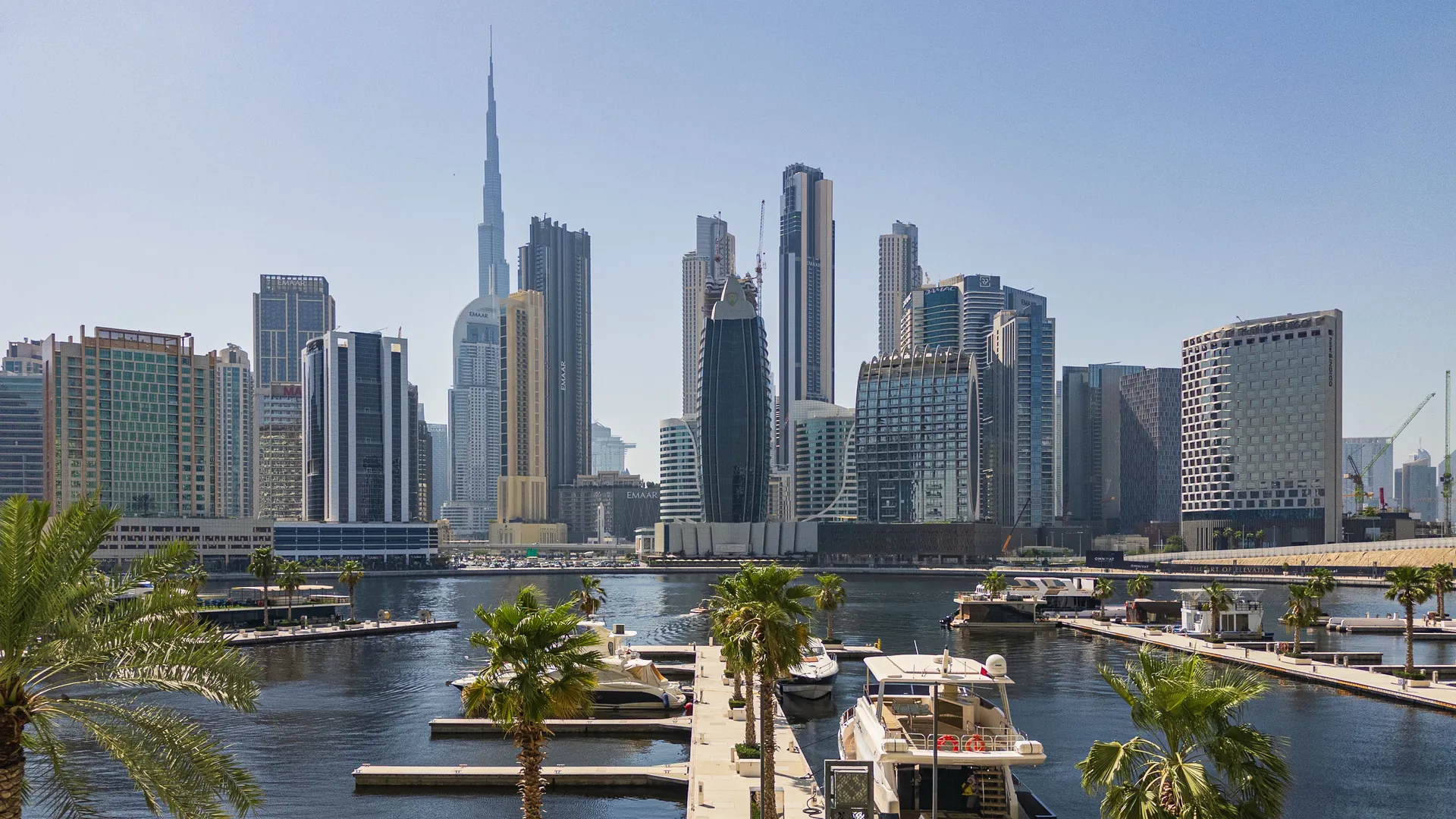
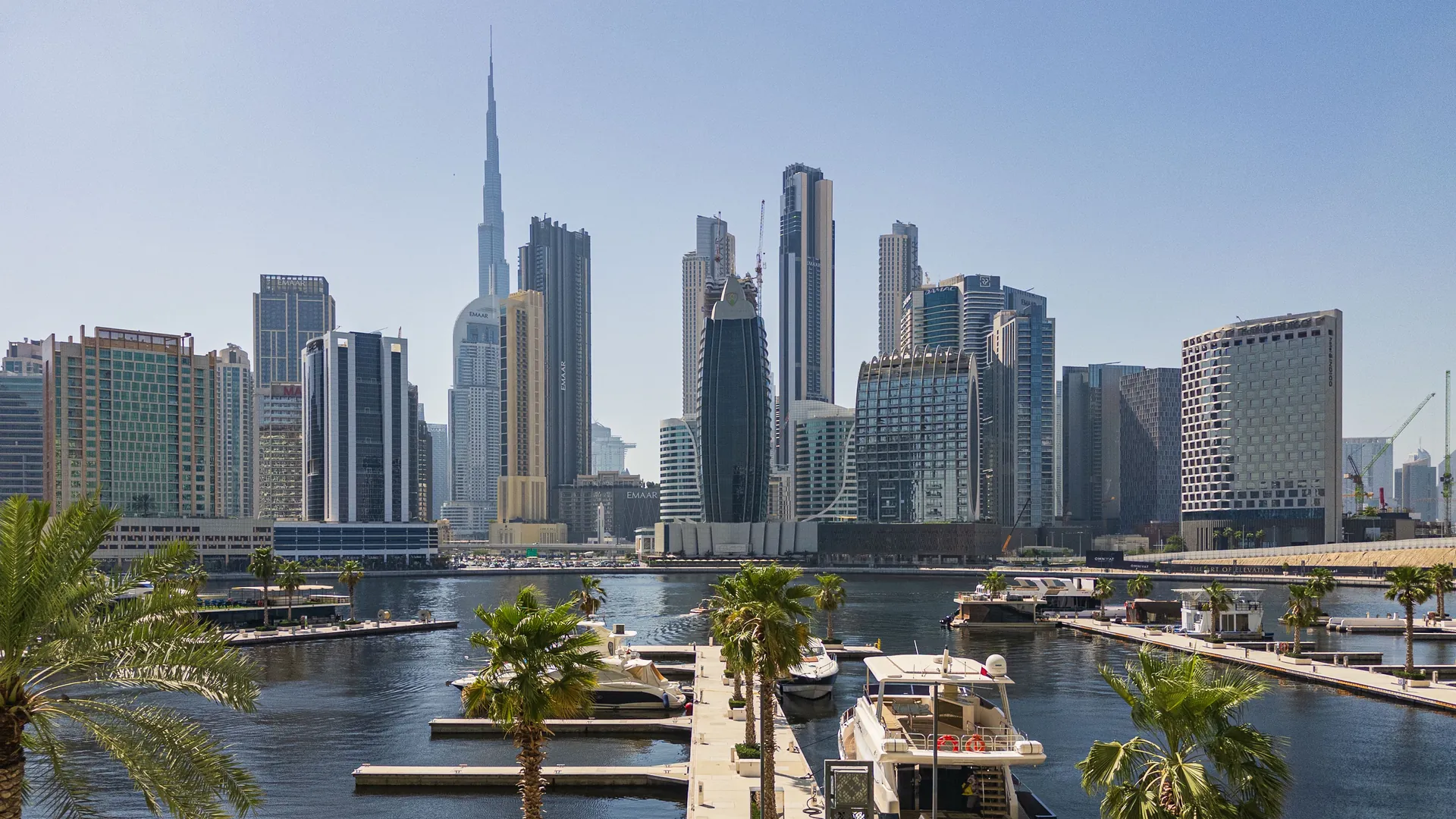
Drone videography in Dubai starts from around AED 1,500 for a simple aerial shoot, but the price is not the interesting part. The real story is the law. To fly a drone legally for any business use in Dubai, you need three separate government approvals, not one, and hobby flying has been suspended, so you cannot simply buy a drone and film. This guide covers the true cost of drone filming in Dubai, the three permits you need, the no-fly zones, and why almost every business hires a licensed operator rather than flying themselves.
We produce video, including licensed aerial videography in Dubai, for UAE brands out of our Dubai and Bengaluru teams. Here is the honest picture in plain language, including the parts that keep a business on the right side of the rules.
Dubai drone rules at a glance
If you only read one section, read this one. These are the facts that govern every drone videography shoot in Dubai:
- Recreational and hobby drone flying has been suspended in Dubai. Only approved commercial operators can fly at all.
- Legal drone filming in Dubai needs three separate approvals: GCAA registration, a DCAA flight approval, and a DFTC filming permit. All three, every time.
- No-fly zones cover a 5 kilometre radius around every airport and a 2 kilometre radius around every heliport.
- Liability insurance is mandatory before the DCAA will approve any flight.
- GCAA fees: drone registration AED 250 to 1,250, remote pilot licence AED 100, operator certificate AED 5,000 per year, operation approval AED 1,000, risk assessment AED 500.
- The DFTC aerial filming location fee is AED 0, but the permit is still required.
- Fines for illegal flying are commonly reported at AED 20,000 to 50,000, with equipment confiscation.
- A licensed operator carries all of this for you. Shoots start from around AED 1,500.
How much does drone videography cost in Dubai?
Drone videography in Dubai starts from around AED 1,500 for a simple aerial session at one location with lightly edited footage. From there, the price grows with the scope of the shoot. These are our own starting estimates, and the final number is confirmed in a short discovery call once we know the locations, the edit, and the use.
What moves the price:
- Number of flights and shoot days.
- Raw clips versus a full, edited and graded film.
- 4K or cinematic quality, which needs higher-end kit.
- The number of locations.
- Permit complexity for sensitive or restricted areas.
When you hire a licensed operator, the price includes handling the government approvals, so you never deal with the aviation authorities or the filming permit yourself. Final pricing depends on scope and is confirmed during discovery. Our Dubai and Bengaluru team keeps the entry price low, with the shoot and permits handled on the ground in Dubai and the editing handled with our Bengaluru post team. If your edit needs titles or animated overlays on top of the aerial footage, see our motion graphics pricing guide for what that layer adds.
Is it legal to fly a drone in Dubai? The three layers
Legal drone videography in Dubai needs three separate government approvals, stacked on top of each other. This is the single most important thing to understand, and it is why the answer to "can I just film with my drone" is no.
Here are the three layers:
- GCAA registration. The drone, the operating company, and the individual pilot must each be registered and certified with the General Civil Aviation Authority, which is the federal aviation authority [1].
- DCAA flight approval. Even with valid GCAA registration, every single flight inside Dubai needs a flight approval from the Dubai Civil Aviation Authority, plus valid insurance in place beforehand [2].
- DFTC filming permit. Separately again, the footage you film needs a filming permit from the Dubai Film and TV Commission. The aerial location fee is AED 0, but the permit is still required [3].
Three different bodies are involved because they regulate three different things. The General Civil Aviation Authority (GCAA) is the UAE's federal aviation regulator, and it certifies the drone, the pilot, and the operating company at the national level. The Dubai Civil Aviation Authority (DCAA) controls Dubai's own airspace, so it signs off each individual flight inside the emirate. The Dubai Film and TV Commission (DFTC) regulates filming itself, so it permits the footage rather than the flight. None of the three can substitute for another, which is why all three approvals are needed.
On top of all three, there is one more fact that changes everything: recreational and hobby drone flying has been suspended in Dubai. That means there is no casual, no-paperwork way to fly at all. Only approved commercial operators can put a drone in the air. So for any business footage, the licensed-operator route is not just the easy option, it is effectively the only legal one.
What are the drone permit fees in Dubai, and who pays them?
GCAA fees for legal drone flying run from AED 100 for a remote pilot licence to AED 5,000 a year for an operator certificate, and a licensed operator already holds most of them. Here is what they are, so you can see what sits behind a compliant shoot [1].
| Government item | Fee (AED) |
|---|---|
| Commercial drone registration (under 5 kg) | 250 |
| Commercial drone registration (up to 25 kg) | up to 1,250 |
| Remote pilot licence | 100 |
| Operator certificate (per year) | 5,000 |
| Operation approval | 1,000 |
| Risk assessment | 500 |
| DFTC aerial filming location fee | 0 |
Added together, a new commercial operator faces roughly AED 6,850 to 7,850 in first-year GCAA fees: AED 250 to 1,250 to register the drone, AED 100 for the remote pilot licence, AED 5,000 for the annual operator certificate, AED 1,000 for the operation approval, and AED 500 for the risk assessment [1]. That total lands before insurance is priced and before any of the processing time is counted.
On top of these, valid liability insurance is required before the DCAA approves a flight. There is no single fixed amount; the cover is sized to the specific operation, so a flight over a crowd needs more than an open-area shoot [2].
Here is the key point for a business: a licensed operator already carries the registrations, the certificate, and the insurance. So when you book a shoot, you are not paying these fees again. You are paying for the footage, and the compliance is already handled. That is the whole value of working with a licensed operator.
Can tourists or individuals fly a drone in Dubai right now?
In practice, no. Recreational and hobby drone flying has been suspended in Dubai, so a visitor or resident cannot simply bring a drone and fly it for fun or for content. There is no hobbyist path that gets around the commercial approvals. As of 2026 there is also no tourist or short-term visitor drone permit for Dubai, so the suspension has no holiday exception, whatever the drone's size or brand.
Straight talk: if you have seen a stunning aerial video of Dubai online, it was almost certainly filmed by a licensed commercial operator, not a tourist with a drone in their luggage. Flying your own drone here without approvals is illegal, and the penalties are serious. If you need aerial footage of Dubai, the safe and legal route is to hire a licensed operator who flies with the proper approvals and insurance for you.
Why hire a licensed operator instead of buying a drone?
For any commercial work, hiring a licensed operator is the only realistic legal route, not just the convenient one. Buying a drone does not make you legal to fly it for business. You would still need GCAA registration for the drone, the company, and yourself as a pilot, a DCAA approval and insurance for every flight, and a DFTC filming permit, and hobby flying is suspended anyway.
Consider the risk if you skip that and fly anyway. Fines for illegal drone flying are commonly reported in the AED 20,000 to 50,000 range, rising sharply for restricted or airport zones, and drones are often confiscated. Against that, a legal shoot with a licensed operator starts from around AED 1,500.
A licensed operator collapses all three legal layers into one booking. Their drone, pilot, and operator certificates are already on file with the GCAA, their DCAA approval process is already in place, and they or their production partner handle the DFTC permit for you. Common mistake: a business buys a drone to "save on videography," then discovers it cannot legally fly it for marketing and the drone sits unused. Hiring is cheaper and safer for anything short of constant, in-house aerial work. Set the AED 6,850-plus of first-year government fees and weeks of processing against a licensed shoot from AED 1,500, and the maths settles the question on its own.
Where can you not fly a drone in Dubai? The no-fly zones
Drones cannot fly within 5 kilometres of any Dubai airport or within 2 kilometres of a heliport, and large further parts of the city are restricted too. A licensed operator plans every shoot around these zones. The main restricted areas are:
- A 5 kilometre no-fly radius around every airport, including Dubai International and Al Maktoum [4].
- A 2 kilometre no-fly radius around heliports, of which Dubai has many because of executive helicopter traffic [4].
- Government buildings, palaces, diplomatic sites, and military installations, which are fully off-limits.
In practice, the 5 kilometre airport radius alone removes large stretches of the city from flying: Dubai International sits beside Deira and Garhoud, and Al Maktoum borders Dubai South, so much of the urban core falls inside a restricted radius before the heliports on hotels and towers are even counted. This is why location checks come first in every shoot plan.
The GCAA publishes a colour-coded zone map, and operators must check the official My Drone Hub app or the drones.gov.ae portal in real time before every flight [1][4]. Landmarks like the Burj Khalifa and Palm Jumeirah sit within controlled airspace and busy zones, so they need special clearance that is not always granted. A licensed operator checks the map, applies for any clearance needed, and tells you honestly when a location is simply not permitted.
How long does it take to arrange legal drone filming in Dubai?
With a licensed operator, arranging a legal shoot usually takes only a few working days, because the operator already holds the GCAA and DCAA registrations. You are mainly waiting on the DFTC filming permit, which typically takes 2 to 5 working days, or up to 10 for sensitive locations near airports or government buildings, plus a short time for the specific flight approval [3].
Doing this from scratch as an unlicensed party is a different story. GCAA organisation registration alone takes around three weeks, and an operation permission around two more [1]. That gap, days versus weeks, is another practical reason the licensed-operator route wins for almost every business shoot. As a working rule, book a licensed drone videographer at least two weeks before the date you need footage. That leaves room for the DFTC permit, the flight approval, and one weather delay.
What is drone videography used for in Dubai?
Drone videography suits any subject that looks better from above, and in Dubai the common uses are:
- Real estate and property marketing, where aerial views sell villas, towers, and communities.
- Weddings and events, for sweeping venue and celebration shots.
- Tourism and hospitality, for hotel and resort brand films.
- Construction and site progress, to document a project over time.
- Corporate and brand films.
- Sports coverage over open ground and marinas.
Every one of these is commercial work, so every one needs a licensed operator and the proper approvals. The rules do not change because it is "just a property listing." A listing video needs the same compliance as a brand film.
Real estate is the biggest single driver of drone videography in Dubai. An aerial establishing shot shows a villa's plot, a tower's view, or a community's layout in a way no ground camera can, which is why listings with aerial video consistently draw more enquiries. If you are building out property marketing more broadly, aerial footage pairs naturally with a strong listing site; see our guide to real estate website development in Dubai.
Common mistakes to avoid
A few mistakes come up again and again with drone videography in Dubai:
- Assuming you can fly your own drone for business footage. Hobby flying is suspended and commercial flying needs the full approval stack.
- Booking a cheap operator who cannot show approvals. If a quote does not include permits and insurance, it is either not legal or will cost more later.
- Leaving permits to the last minute for a sensitive location, which can take up to 10 working days.
- Trying to film a landmark without checking the zone map first.
The fix for all of these is the same: work with a licensed operator and confirm that permits and insurance are part of the quote.
Real client stories
These are real situations from aerial shoots we have supported. Names and a few details have been changed for privacy.
Khalid's real estate agency (Emirati founder). Khalid bought a drone to film his listings and then learned he could not legally fly it for marketing. We arranged the shoots through a licensed operator instead. "I wasted money on a drone I cannot use for work," he says. "Hire the operator; do not buy the drone."
Elena's wedding planning company (expat founder). Elena wanted aerial footage at an outdoor venue and did not realise a guest could not just fly a drone. We booked a licensed operator with the approvals and insurance in place. "I had no idea it needed three permits," she says. "The operator handled all of it and the footage was stunning."
Ravi's construction firm (Indian founder). Ravi needed monthly progress footage of a large site near a controlled zone. We set up a licensed operator with the right clearances so the recurring shoots stayed compliant. "The clearance near the airport zone was the hard part," he says. "Having a licensed operator made it routine."
How SKIMBOX handles drone videography
We produce aerial footage through a GCAA-registered, DCAA-approved operator, so you get compliant, insured drone videography without ever dealing with the aviation authorities or the filming permit yourself. We check the zone map, arrange the approvals, and deliver the edit from our Bengaluru post team, all scoped to your use and budget. See our media production services, or contact us for a clear starting estimate.
For related reading, see our guides on how to get a filming permit in Dubai, video production cost in Dubai, and choosing a video production company.
References
[1] General Civil Aviation Authority (GCAA), UAE - Drone and operator registration, remote pilot and operator fees, and the national no-fly-zone map (drones.gov.ae). gcaa.gov.ae [2] Dubai Civil Aviation Authority (DCAA) - Flight approval for Dubai airspace, drone regulations, and mandatory liability insurance. dcaa.gov.ae [3] Dubai Film and TV Commission (DFTC) - Aerial filming permit and processing timelines. filmdubai.gov.ae [4] GCAA / DCAA - UAE drone no-fly zones (5 km around airports, 2 km around heliports) and the My Drone Hub checking app. gcaa.gov.ae, dcaa.gov.ae [5] SKIMBOX - Internal experience producing licensed aerial video in Dubai through a registered drone operator, including permit handling and compliant shoot planning, 2026. skimbox.co